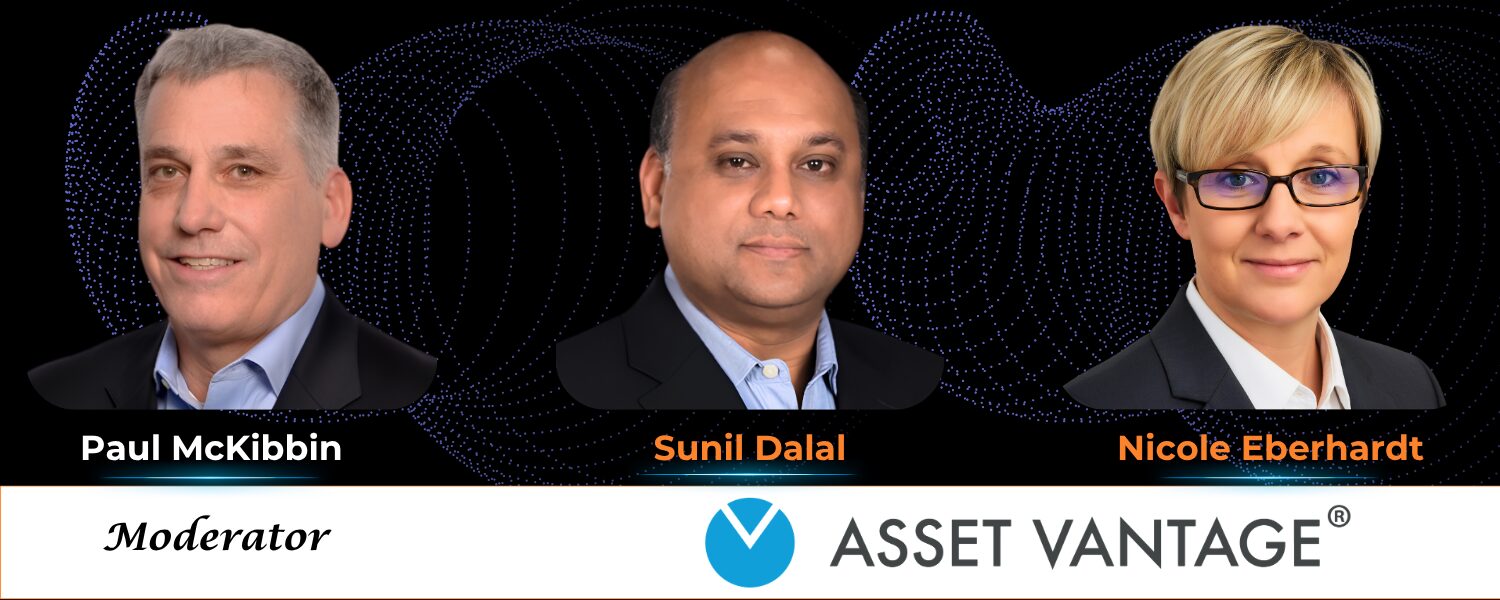
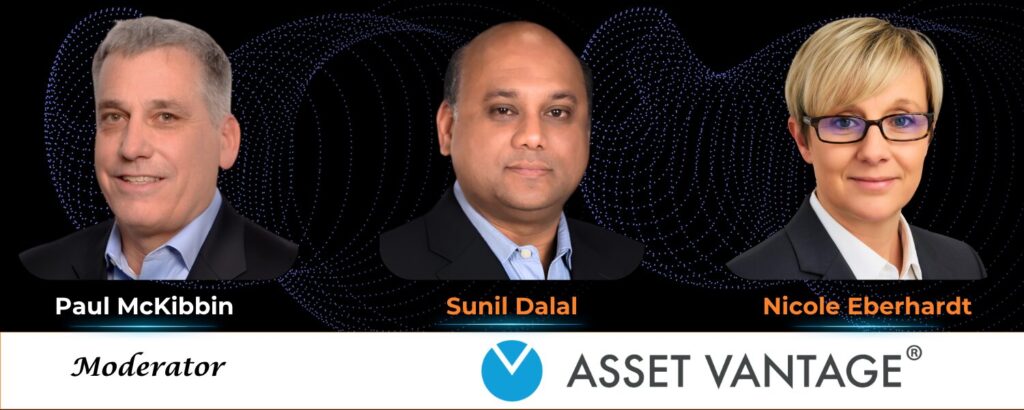
Paul McKibbin (EY Family Office Advisory) with Sunil Dalal and Nicole Eberhardt of Asset Vantage
Private equity is buying its way through family office technology. Asset Vantage has never taken a cent of it — and its founder’s reasoning is the due-diligence question most family offices never think to ask their vendors.
Sunil Dalal sold an industrial automation business in 2007, put the proceeds into his own family office, and was startled to find it running on Excel and QuickBooks. The platform he built to fix that now serves 400 family offices and is still majority-owned by the family office that wrote its first cheque.
FIVE TAKEAWAYS
The first cheque a vendor takes decides its future
An outside investor has to exit when the fund life ends — that exit is scheduled from the moment the money lands. Dalal turned private equity down on control rather than valuation: he was unwilling to have somebody else setting the agenda in the meantime.
“Our family office customers last for generations, and they expect that the technology will also last for a few generations. But how many software companies do you see now today that were there thirty years ago or fifty years ago?” — Sunil Dalal (39:20)
▶ Watch the clip: Who Is Family Office Technology Really Built For?
Outside capital pushes vendors away from single family offices
McKibbin named the mechanism plainly: single family offices are hard to find and the sales cycle runs from eighteen months to forever. A firm that has taken growth capital and needs velocity has an obvious escape route — broaden into adjacent, easier markets. Several have, and the cost lands on the clients the product was built for. (41:17)
AI’s problem isn’t capability — it’s reach
Dalal’s image: 80–90% of a family office’s data sits below the waterline, trapped in separate systems, in books and in people’s heads. AI can’t reach any of it, so it stays limited to public sources — and the aggregation platform becomes the precondition rather than the casualty.
“The problem with AI is it doesn’t have access to proprietary data… AI is not going to replace an SAP in a factory or a CRM tool like Salesforce in an enterprise.” — Sunil Dalal (28:20 and 29:44)
Which sets up McKibbin’s test for any new capability — do you bolt it on, or re-architect? Do you put a garage on the house? Eberhardt’s answer is the practical one, and it puts the work back on the buyer rather than the vendor.
“If you have that single source of truth, clean data accessible to you, and you understand what you’re looking to get out of a tool like AI, you’re going to be much more likely to be able to just tack that on — as opposed to having to rebuild.” — Nicole Eberhardt (30:49)
The most concrete AI prediction was about hiring, not software
If plain-language access removes the need to navigate the system — “generate a report with my top five holdings as of this date, grouped this way” — then the ability to navigate the system stops being a hiring criterion. Eberhardt’s conclusion is the sharpest practical claim in the episode: family offices can start hiring for judgement instead of software fluency.
“The people that you hire to do these jobs don’t have to go through that training — they can have a different skill set. They don’t need to be people that are naturally adept at navigating software, but can really be the thinkers that add value to the insights they’re provided.” — Nicole Eberhardt (30:49)
Also came up: Eberhardt on why platforms that grew up serving the CFO rarely serve the CIO well, “because they grew up as one thing or the other” (25:31) · why the addressable market moved down to the $100–500m band — “there’s only so many billionaires in the world” (16:04) · the App Store and why nobody credible sells the monolith any more (13:19) · Dalal on running his own family office on the product: “I eat in the same restaurant as our customers” (19:20).
AND ONE PREDICTION
Asked what’s about to hit family offices, Dalal didn’t say AI. He said the private bank and the wealth manager are losing their grip and the CPA firm is picking it up — as platforms make offices self-sufficient enough to get portfolio insight without calling anyone. He’s seeing small and mid-size CPA firms position for exactly that. (43:54)
WHO WAS ON
Paul McKibbin — Managing Director, Family Office Advisory, EY · moderator
Sunil Dalal — Founder & Chairman, Unidel · Asset Vantage
Nicole Eberhardt — Managing Director, Asset Vantage
Phil Strassler — Family Office Rising Gen Leadership Institute
WATCH THE FULL SESSION
Read the full transcript
Adriana Zalucka · 0:00
I’m Adriana with FOTechHub and in today’s session, which is part of our collaboration with Phil Strassler and the Larry Krauss Family Office Technology Institute, we are spotlighting Asset Vantage. And we have Nicole Eberhardt, managing director, and Sunil Dalal, who is founder and chairman of Unidel, which owns the majority of Asset Vantage. And moderating, we have Paul McKibbin from EY, a longtime friend. And before we kick it off, and before I hand over to Phil, I just wanted to make an announcement that it is the fifth anniversary. It’s literally on the 8th of June, Phil. I think it’s Monday, right? That you had your first episode of the technology series. So, it’s five years. We have been collaborating for three years. And we’re also kind of transitioning the technology more under the FOTechHub umbrella, which Phil is going to remain involved. But we are going to also continue to evolve the series, the format. And some of it actually you’re seeing already today. So, slightly different format than before. So, not much really will change, I guess, but this is just an announcement of a little bit of a transition. And Phil, I want to take this opportunity to thank you for your contribution to FOTechHub, as well as the industry, of course. And I know that you are continuing, you’re not slowing down, with your tax institute. and your Rising Gen Institute, which is actually a new formation, very exciting, and I know that takes a lot of energy. And by the way, we’re going to have a little poll for people who want to be involved in the tax institute, which was actually the origination of technology. That’s where technology came from, was from Phil’s conversation about tax and the technology that’s needed to process all those favorite people’s documents. So anyway, so we’re also in New York actually next week to celebrate some of these milestones. And if any of our audience are in the city and would like to join us, please let me know. Just on housekeeping on questions, we have chats. So please put your questions in the chat. And that’s on your right. And also you can see who’s with us in the People tab on the right as well. And with that, I’m going to hand over to Phil to introduce our guest today. Over to you, Phil.
Phil Strassler · 2:41
Thank you so much, sir. Thank you to everyone who are attending. Thank you, Adriana, and Alex, for a great collaboration. And this will continue. But because I’m starting a new institute, which is the Family Office Rising Gen Leadership Institute, I’m going to devote my time there. And the technology will be in good hands. And I will be up around, but I will not be playing this big larger role as I have in the past. And this is a great conclusion because I have some old friends here. Paul McKibbin is really, he’s not an old, he’s just a friend. Paul is the managing director of EY’s private family office advisory services. And I’ve worked with Paul for over 25 years now on probably the most complex single family offices that you can imagine. He supports the family offices on business and operational risk assessment, and re-engineering family offices for technology. He is a specialist in the information architecture. And that’s really the watchword. Information architecture and data is going to be where this industry is going to be going. He has selected and implemented risk, measurement, reporting and accounting infrastructure for some of the most complex and sophisticated family offices. And it’s my pleasure to introduce him. And as the moderator of this great program, two friends also.
Paul McKibbin · 4:22
Thank you, Phil. And very exciting news, by the way, about your new institute. And I look forward to learning a lot more about that. As Phil said, I’m Paul McKibbin, managing director for the family office advisory services group within Ernst & Young. And I do focus mainly on risk and technology there. And today I’m joined by two of the leading executives for one of the platforms that we track continuously and which is a leading platform in the field. And that is Asset Vantage. Now, I’m always excited to talk about technology platforms. But there’s a couple of things that are particularly interesting in this case. First of all, I think this company has an especially unusual origin story, right? Because it was not a US-based firm, and I’m going to let Sunil tell a story a little bit about that. But there’s a couple of other things as well. So, Asset Vantage has been global since its inception. I find that many platforms that in their US-based struggle take time, you know, work very hard over many years to understand how do I globalize here and what are the real challenges. This is a firm that’s always had that. background and continues to have a very strong position globally, so we’ll let them talk about that. I also want to talk today about some trends that we see in the marketplace. I know there’s no escaping talking about AI, and I think we’ll find that there’s a particularly interesting point of view with respect to AI here. And then finally, one of the The things that I’m seeing a lot in the industry today is PE-driven growth, right? Private equity firms coming in, acquiring stakes and beginning to drive the growth of firms that are in many cases very well established. And again, I’m going to let two of them talk about this because they’re quite different in that context. Let me start to Sunil, with you. We first met more than 15 years ago when you brought Asset Vantage to the United States. In addition to being a founder, you’re a serial entrepreneur and a family office principal herself. So can you just give the group a little background on sort of what brought you into the family office space and the creation of Asset Vantage?
Sunil Dalal · 6:31
Sure. Good morning, everyone. Thank you first for having both Nicole and myself on this platform on today’s call and you’ve been a good friend all and obviously I’ve known Adriana and Phil for a long time as well. So the family story in my case is that I was actually the founder of an industrial automation business. was that business supplied technology to the manufacturing industry and that was kind of what I was doing from 91 till 2007. Through that business I learned what mission critical was obviously in a different context to supply equipment to steel mills and power plants and chemical factories and then we had a liquidity event in 2007 we sold four of the five companies in the group and the money went into our family’s family office. That was around 2008, just before the financial crisis. And given my industrial automation background, after we had finished deploying the money into what I thought was good investments, I started focusing on the operations of the family office and I was a bit startled given my background that we were using Excel and QuickBooks and we didn’t have quote-unquote an ERP to run the operation. I thought that If I just went out into the market and looked for a solution, it should be readily available given that the family office industry had existed for so many years, but I was a bit shocked. Now, many years later, The problem that I think we were looking to solve was the data aggregation across liquid and illiquid assets, accounting or general ledger, and then reporting and analytics. We couldn’t find that. Paul, that’s when I met you at Family Office Metrics. So that was really the point at which I started looking out, couldn’t find it, and then the rest is history. We decided to build our own platform initially. and then eventually put them on.
Paul McKibbin · 9:00
So Nicole, I’m going to ask you to introduce yourself in the same way, but you and I first met when you were with Ledgex. And I know that prior to that, you worked with the great many industries, Sander, enterprise platforms. So tell me what led you to join Asset Vantage.
Nicole Eberhardt · 9:19
So my background is that I’ve been in alternative investment software for about 25 years now. And along with that background, I also spent a good amount of time doing family office consulting. So I’ve learned a lot over the years about family offices, their needs, business requirements, and then also how underserved the market is from a software standpoint. So, over the last summer, actually Phil was instrumental in introducing me to Sunil for us to come together and talk about, you know, potentially working together in the organization and through Phil introducing us and then kind of stepping away. I was very much taken with the approach that Asset Vantage takes to not just software, but innovation, not just a kind of standing still in an industry that has a tendency to do so, I think, but also the attention to client service and client success.
Paul McKibbin · 10:36
Describe for me what the Asset Vantage platform does, because we’re not doing a demo today. So everyone in the group, I hope, has heard of the platform and is familiar with it. But give us a sense of what it does. And from your point of view, what’s special about this platform?
Nicole Eberhardt · 10:51
Sure. We are a comprehensive portfolio management and accounting solution. And what we strive to be known as is the financial operating system. for modern family offices. So what that means is we are the backbone and the foundational tool within family offices to run their financial reporting as well as any of their investment reporting. So with that, we also look to be the basis and lay the groundwork for then the ecosystem that is built around that operating system. to be able to provide clients with a solution to their needs. So any family office or service provider to the family office market, regardless of where they fall in their evolutionary journey, as I like to say as a family office. So whether you’re small, just kind of getting your arms around all of what needs to be done all the way up through more institutional firms that are looking for additional insights and that next-level information to be able to help family offices and their service providers be able to provide that next-level analytics and decision-making capabilities.
Paul McKibbin · 12:18
So you use two terms there that I want to draw attention to. Because I’ve been in the space for a while, right, and attracting these platforms for a while, I find that there’s a cycle that occurs, right? So very often, we’re looking to say, let’s create a platform. There’s the totality of what you will need to run your family office. And there’s firms today that sort of say, we want to be the only one you go to, which is a whole industry. The other words you used was ecosystem. And there’s no doubt there’s a sort of a countervailing trend that says, unfortunately, you’re not going to be able to do everything. You’re going to have to pair with specialists that do assets that you don’t understand or provide data feeds that are not something that you want to manage. So tell me how you look at that problem and Sunil addressed this first. Do you view yourselves primarily as the all-inclusive platform, right? Or do you want to be part of an ecosystem or is it about? Yeah.
Sunil Dalal · 13:19
So, you know, obviously when we started, we had to do everything that we couldn’t buy, which meant plugging the whole plumbing area of data aggregation. then moving that data into a GL and on to performance reporting. But as time went on, obviously as a company, you can’t do everything. And that’s why we started adopting best practices from the SaaS industry. And with that, what we want to do well is really the core of what Nicole already described. And we’ll keep releasing new features and new innovations. learning from the customer base, but then we’ve recently launched something called the App Store and What we intend to do with that app store is to get other developers and innovators to release additional functionality or plug their product, which already exists into our system. So examples could be if we were talking to the MFO industry or RIA industry, then there could be a CRM plugin. Or if we’re talking to an institutional grade family office, then we could plug into, let’s say, a higher-end risk management system. or if we were talking to a lower end family office through, let’s say private banks, then there could be some financial planning tools. So that’s really kind of, we see ourselves as part of an ecosystem rather than being one single monolith platform because it’s really not possible to do everything.
Nicole Eberhardt · 15:03
I’m gonna, please. Yeah, so what I was going to add to that is, you know, so that’s why I typically describe it as comprehensive, right? So it’s not all in one because we’re not looking to be all things to all people. We understand that it is an ecosystem that we’re looking to operate in. And more importantly, we’re looking to be that foundational source of data that then the rest of the ecosystem can rely on and sit on top of.
Paul McKibbin · 15:34
says, no, I’m going to put you on the spot with a memory. When we first spoke, your vision, the way you described it at that time, was sort of as an S advantage as an Amex — the American Express Black Card, right? A service that could go to Ultra iNet Worth, Ultra iNet Worth on a massive scale. And over time, you’ve adapted your platform to be one of the leading single family office platforms. What led to that change? Why is this a good marketplace?
Sunil Dalal · 16:04
Because when we started, the industry was very small, concentrated at the very top. There’s only so many billionaires in the world. And the Amex Black Card kind of represented the volume end of the market. And if you have to be a successful scaled up SaaS company, you really need more than 50 or 100 customers, you need thousands of customers. So that was really the idea back then Paul, but what’s happened over time is the industries matured and there’s a lot of liquidity and wealth that’s been created and we’re really seeing a lot of demand from the level below the billionaire market. So the hundred to five hundred million dollar market which formerly couldn’t afford or the platform would have too much complexity to deploy such a solution. But now we see that as an everyday thing where we solve that market. and in due course we will come down further. Perfect.
Paul McKibbin · 17:16
Nicole, one of the things I will often tell my clients about Asset Vantage and have for many years is because I knew the background that they came from, right? Because they had run software factories and done this in other fields with a degree of engineering rigor, right? I always say if they say they’re going to deliver it, they will, right? And they build these things to get done. So what’s your experience? You’ve been in companies as large as SS&C. You’ve been in many enterprise builders, right? Tell me about your experience of Asset Vantage on that front.
Nicole Eberhardt · 17:48
So I think that’s a few things that stand out from my experience here that are different from what I’ve seen anywhere else. And I think that rigor is one of those things, that rigor that goes back from kind of the founding of Unidel and how the technology has come forward and the thought processes that go into it, but also the how we’re keeping track of what we’re succeeding at, what we’re failing at, and that continued innovation and iteration on constantly trying to be better tomorrow than we were yesterday, I think, is one of the key things that stands out. As well as, like I said, that attention to white glove service. So I think still keeping with that original thought that Sunil had is that the intent to be able to serve clients at the highest level and making sure that it never becomes a rote, out-of-the-box, like a solution that we’re providing, but really more that we’re being partners to our clients and really servicing them and getting to know them so that we can continue to be a good partner with them into the future.
Sunil Dalal · 19:20
Thank you. See how did you want to add something? I want to just add to that. You know, my family office uses Asset Vantage. I eat in the same restaurant as our customers. We are the first people who experience the product, not me personally, but my team and then me on a monthly basis as I do with the reviews. We’re seeing first hand. you know, what we are missing, what’s working really well, what’s deficient, and we’re constantly giving that feedback to the company and to the team at Asset Vantage.
Paul McKibbin · 20:04
So when you came on, I can see Nicole behind you that you are sitting in Unidel’s Innovation Center in India. And so innovation is a topic that As I said, I’ve tracked cycles and family office platforms for some years. So let me just start with this. Where do you see today the major changes and the major requirements for innovation in the platforms that are out there?
Nicole Eberhardt · 20:32
Sunil, I’ll let you kind of start with that. Yeah.
Sunil Dalal · 20:35
Well, one is innovation around just best-in-class technologies to build a platform like Asset Vantage, whether we’re using AI tools to build faster features, or we’re using AI at the front end to release features. So some of the innovation is just around using the newer age tools. Like five years ago or 10 years ago, the innovation was to adopt the cloud. Now that is around adopting new age technology. Some of the other innovation is really launching things that customers may not think that they need today. For example, in the next couple of quarters, we will launch something called AV Edge, which is actually our first release on the App Store, which we ourselves are here. And that will sit on your Asset Vantage license and be like a CIO, a virtual CIO and give you a sort of a RAG status or red amber green status. And you can configure that. Now, no one told us that that had to be done. But what happened was when I was doing my monthly reviews, month after month, year after year, I felt like the system needed to tell us something rather than we questioning the system. So that was something that was born. And like this, the list goes on. Maybe people you want to talk about the community thing, which is another innovation.
Nicole Eberhardt · 22:12
Sure. I think there’s two actually things that come to mind. So one being the AV community, which is one of the initiatives that we’re rolling out now. And what that involves is us putting together both a virtual and in-person community platform for all of our clients to communicate and get together with us and more importantly with our other clients, right? So from an online forum type of perspective that’s integrated with the application where clients can see thought leadership, white papers, articles and other types of information. as well as then also have a way to collaborate and speak to one another and discuss best practices. And then also one of the parts of that that we’ve also recently rolled out is our in-person events where we’re getting clients together in our various different locations around the US where we have concentrations just where we can get together with the clients and have our team together with a group of clients to interact with one another. And it’s something that we’ve gotten a lot of great feedback on just because we’re thinking not just always about features and functions, but how can we also provide value to the clients outside of what you’re logging into every day? So along the lines of those best practices and just a tighter knit community around.
Sunil Dalal · 23:57
And just to add to that from that community. I think everyone will start to see how some families and family offices have started to use the platform in very interesting ways. For example, my family, once we got through all the financial asset classes, we started using the platform too as a repository for our family collectibles, art, jewelry, stamps, photographs, other memorabilia. And we’ve effectively used the platform for that. There’s other families I’ve seen are using it for philanthropy as to try and figure out where the cash flow for their foundation is going to come from. So I think through that community, we’ll start discovering how people have adapted the platform in ways that even we as the creator of the platform didn’t imagine.
Paul McKibbin · 24:57
One other question I want to ask on that front is, you know, you gave some examples and you began with your edge platform that you’re launching, which is for the CIO, but you just gave some examples that I think are quite different. They’re more of a CFO perspective. In other words, I need to figure out where the cash flow is going to come from this. So I find that often platforms address one or the other of those two. So talk a little bit about, you know, on the edge, edges for the CIO. Talk a little bit about what you’re doing today for the Chief Financial Officer of the Family Office.
Nicole Eberhardt · 25:31
Sure, so one of the most important parts about that, I think, kind of touching on that a little bit by bringing up the fact that a lot of systems do one or the other. And a lot of the systems that do both don’t always do both well when they attempt to do so because they grew up as one thing or the other. So the fact that we’re built from the ground up to serve both of those needs, I think is very important and how those two things intersect is a big part of that integrated and comprehensive solution that we provide. So how we can continue to enhance the investment data and add additional insights through something like an AV edge. We spend the same amount of attention and time on what are the additional things either through reporting in ways that we can enhance the experience and the insights and the information that we’re providing to the CFOs in that way, but also through workflow, obviously, and how we’re interacting with that data from a workflow usability standpoint. And I think obviously this is where we start getting into AI and some of those kinds of things. But I think whether you’re talking about invest data or you’re talking about financial data, what’s important is to be able to solve all of the problems and make it easy enough for all of our clients to be able to get that data and have those insights that then the time can be spent on those higher level decision making and value added exercises. So whether you’re one of our single family office clients or even the service providers that we also serve and solution for being able to add that additional value is what we strive to be able to allow our clients to do on both sides of that equation.
Paul McKibbin · 27:35
So I’ve been holding off on bringing up AI, but now it’s come up to your times. And I think it’s inevitable that today, this is the topic that is raised in every form that I see, every call that I have. It’s like, well, tell me about AI. Tell me what we should be doing with AI. How should we look at this? So as you look at AI in the marketplace, and Sunil, you span marketplaces from your background. You’re used to seeing it used in many places. My first question is, is our family office is mostly using this as a sort of a back office process improvement thing, or is it coming into the front office, right? As a decision making tool, thought partner, what’s your experience on where they’re sort of clamoring for this capability?
Sunil Dalal · 28:20
Yeah, I kind of answered this from two perspectives. One is from as advantages perspective, and the other is from my family. So AI is kind of obviously a very powerful, very valuable feature and a tool that allows from an AV perspective, allows us to engineer and come up with features faster than ever before. But the problem with AI, and if you think about it from an iceberg perspective, if you think about below the water line of an iceberg, that’s about 80 or 90% is all of the trapped and hidden data which sits in various systems. It could be an Asset Vantage, it could be in books, it could be in people’s heads. The problem with AI is it doesn’t have access to proprietary data. And so using AI in a family office really is currently restricted to sources of data which are publicly available.
Nicole Eberhardt · 29:35
Oh, we lost it.
Paul McKibbin · 29:39
Are you back? Yeah, Sunil, are you there?
Sunil Dalal · 29:44
If I have an investment opportunity from multiple sources, we’re using it to crunch data, analyze, get some insights, and then we marry that with the insights that are coming out from Asset Vantage. So the short answer is that I don’t see AI replacing a platform that allows family offices. It could be any platform that allows family offices to aggregate, trap, or scatter data. You first need to do that and that data will reside in a system the same way that AI is not going to replace an SAP in a factory or a CRM tool like Salesforce in an enterprise.
Paul McKibbin · 30:27
So Nicole, when features are added to software platforms and you’ve seen more than one, you always have to ask yourself, is this something that we are going to layer on? Do you put a garage on the house? Or do I have to re-architect? in order to manage this. So which do you think AI is?
Nicole Eberhardt · 30:49
Well, I think to kind of even piggyback on what Sunil was talking about is, I think it depends on the organization. And I say this from my consulting background, one of the most important things is that you have your house in order and that you know what your needs are. So it depends on what your starting point is, whether or not it’s going to be easy for you to just add on, you know, using the garage analogy or do we have to do more of a full renovation type of scenario. So if you have that single source of truth, clean data accessible to you and you understand your needs and you understand what what you’re looking to get out of a tool like AI, you’re going to be much more. likely to be able to just tack that on as opposed to have to kind of rebuild in order to. So having a solution like asset manage that has all of that already built in, cleaned up, systematized, and we’ve already spent the time with you as a client to help you understand your needs and where you’re looking to go is kind of the first step in that process. And then where we look to go with it, From there is to have that have AI that is be able to assist you in servicing those problems and solving those problems right so making it easy for you to get there and also providing those additional insights so. For example, by way of chatbots that allow you to understand how to use software like Asset Vantage to then also being able to cut down on the number of steps it takes, for example, to get to the data that you’re looking for. So in both of those scenarios, when you can use a chat bot on top of a solution like Asset Vantage to just in plain language, say, how do I do this thing? Or even better, say, generate a report with my top five holdings as of the state grouped in this way for this particular data set. What that does is, for users, you now no longer need the full training of where everything is and having to remember how to locate all of these things, it becomes much more natural for you to access that information. And then you as a management team in this organization, the people that you hire to then do these jobs don’t have to go through that training, can have a different skill set, for example, that they don’t need to be people that are naturally adept at navigating software but can really be the thinkers that can add that value to the insights they’re provided. So there’s just some kind of space.
Sunil Dalal · 34:03
One more thing to what Nicole’s saying, there’s also the whole issue of data privacy. And so when we leverage AI at Asset Vantage, you know that the privacy structure that we have within the product is not being lost. And so everything is still just as secure as before.
Paul McKibbin · 34:32
One of the, I’m just shifting gears a little bit. One of the things I often hear people talk about is globalization of family offices. And there’s a kind of a, often the case is made that, well, the US is the market that really defines what’s leading class in single family offices. And I’m always a little puzzled by that because in many ways I find that my US family offices are quite US centric, right? And what they do, whereas my global family offices have always operated. in that fashion, much as you have always operated in that fashion. So two questions. One is, what’s your opinion on this? Where do you look for innovation with global family offices, with US family offices? It could be both. But give me some sense of sort of what you see on the innovation front of the global family offices.
Sunil Dalal · 35:20
Yeah. So look, as of now, just to give some stats, we have about 400 family offices as customers. Nicole, can you take that? Can you see me? We have 400 family offices, 70% in the US about the rest in many in 10 other countries. So from day one, as you said before, that we’ve always been global. What we’ve seen in terms of those jurisdictions that have adopted our product, they’ve always been complex tax code countries. Because we’re a general ledger based system, they’ve always adopted these countries that have a complex tax code in India, the US, they’ve always been first to adopt the platform. So for us, innovation is always around ensuring that any jurisdiction anywhere in the world is a customer for us, not just the US or not just the Middle East or the UK.
Paul McKibbin · 36:43
So why have you been able to operate globally consistently while other firms haven’t?
Sunil Dalal · 36:50
My background is that I’ve built companies that have always been global. The U.S. has always been a major market for us, not only in Asset Vantage, but all the other businesses that we own today. So it’s just a cultural thing that we think global all the time. And it’s not like we’re only here to serve one market. I think Nicole, maybe running AV in the US, you’ll probably have a better feel for that. Sure.
Nicole Eberhardt · 37:22
Yeah, and I think I’ve also kind of seen it from the flip side of having been at organizations that weren’t global from day one. So I think it’s what Having always been a global organization and having that just built and ingrained into our thought processes, we always know that we have to serve the full geography of the client base. Whereas I’ve worked at organizations in the past that primarily it’s a US-based organization and we also do FX, but it’s not the first thing that we think of. Being a global organization and always having had clients across the globe, it’s always on our mind of what the differences are, any of the nuances that we might need to tackle. in any new feature, new concept that we’re looking to add into the solution, which really just helps to kind of broaden our viewpoint, you know, and always makes it so that we never have that narrow scope going into any particular initiative that we’re working on.
Sunil Dalal · 38:40
And also the fact that we have a global team helps. Yes. So. Yeah. So.
Paul McKibbin · 38:49
A couple other topics I wanted to touch on. One is, I said that the industry today seems to be driving towards what I would think of as PE-led growth, right? I see a lot of firms sort of taking capital, trying to grow as rapidly as they can. In some cases, shifting away from single family offices into broader marketplaces as a result, but you’re a founder led and you’ve not done these things. Talk to me a little bit about how you see the difference there. And whether you think this is a legitimate travel?
Sunil Dalal · 39:20
So look, I think it’s very specific to us. We’ve been fortunate from day one that my family office was the first investor and continued to invest in the business. We own the majority stake in the business and we’ve not really found the need to get private equity because I’ve had many conversations with many investors. And I felt uncomfortable with anyone else driving our agenda. We’re a company that focuses on having the best product with the best service and the best value for money. And if an investor comes in and sort of shifts that focus onto something that’s a priority for them, that didn’t ever work for me. But like I said, because our foundation was built on capital that I got from my family office, we didn’t have to look for outside capital. And it’s really that first check that you take from an outside investor, which kind of determines your future, because those investors will have to get out when the fund life is over. And then, you know, that goes on. So I think in our situation, I come with a tech background. I have a family office. We had the capital. These are circumstances that are perhaps not there for everyone. So we’ve been fortunate. And I think it’s also something that our customers perhaps don’t ask too often, that what will happen in five years or 10 years, because our family office customers last for generations. And they expect, they sort of expect that the technology will also last for a few generations. But how many software companies do you see now today that were there 30 years ago or 50 years ago?
Paul McKibbin · 41:17
Right. And one of the consequences in some cases of taking outside capital is to say, okay, family offices are great, but they’re hard to find. You know, sales cycle is 18 months to forever. You know, like, how do I actually grow a business to the extent that people get access? I think that’s, you know, when you say you’re, you’re in this for a generational, but the generational, that’s, that’s probably the result.
Sunil Dalal · 41:40
Good thing is that we’re profitable. Right. And we’re not dipping into family office capital anymore. We’re able to use our own profitability to fund our own growth. The other good thing is that, The shareholders, which was the family office, doesn’t expect any dividends. So we can literally plow back everything into growth and innovation. That also means that we don’t end up spending like crazy on sponsorships and things like that. But I haven’t really seen any of that spending actually generate real ROI.
Paul McKibbin · 42:21
Adriana, I see you’ve come on. I think we’re down close to the end of our time.
Adriana Zalucka · 42:25
Yes, we were scheduled for 45 minutes. So why don’t we start wrapping up?
Paul McKibbin · 42:30
Absolutely. So let me just ask one final question from you guys. What do you guys see as the most important thing that family offices are getting ready to face? What have they missed and what’s getting ready to hit them?
Nicole Eberhardt · 42:46
Sure, so I think, you know, obviously getting back to, you know, what is always the topic on everyone’s mind being AI these days. I think the thing that family offices are starting to face is the reality of that and that being now a persistent thing in their their life right so how does it fit into their office is now something that’s really tangibly starting to be considered right so the what our clients are facing is how to bring that into their organization in a secure and way that also adds value and a lot of that comes into making sure that they’re understanding what their business is and what the needs are and that they have the foundational information in a way that then can make AI utilized in an efficient way for them. So I think what is currently on their mind and the thing that needs to be tackled is exactly how that’s going to fit in.
Sunil Dalal · 43:54
And I think taking a segue from what Nicole just said. I think we’re also going to, and I’m certainly starting to see that we’re also seeing the diminishing dominance of the private bank or wealth management firm and the shifting power to the CPA firm. I think as platforms like AV evolve, as tools like AV Edge come on top, family offices are going to be self-sufficient and are going to get a lot of insights on their portfolio without actually calling anyone or talking to anyone. And that’s another shift that we’re seeing in the US market at least, is that we’re seeing mid to small size CPAs getting ready for that. Phil’s helping us on that, but really they’re getting into this business. And so as a company, we’re beginning to support those other service providers that traditionally want in this place.
Paul McKibbin · 45:00
Perfect, thank you. So I know we’ve gone a minute over here, Adriana. I’m going to turn it back to you. I want to thank both Sunil and Nicole for the time to fill you and Adriana for having us here today.
Adriana Zalucka · 45:11
Thank you. That was great. I really enjoyed your comments, actually, about the ownership. I think that’s a great conversation that could be expanded. So maybe down the line. And also, thank you for answering my question on the MCP, the different approaches to AI, because we’re also seeing this sort of shuffle of how different companies are going about this and the thinking. So thanks for that. So Phil, would you like to add something?
Phil Strassler · 45:40
This is a great program. Paul, thank you so much. Sunil and Nicole, amazing. Just a really great program, want to learn, okay? And Adriana and Alex, I just want to thank you. Great three years, great five years. You’ll see me around, but great to hear us on the baton. Thank you again.